Professional, Customizable Tobacco Transformation Services
Lifeasible offers a comprehensive tobacco transformation platform optimized for both fundamental plant science and molecular farming applications. Nicotiana tabacum, an allotetraploid member of the Solanaceae family, stands as one of the most historically significant model organisms in plant biotechnology—serving as the host for the first successful transgenic plant experiments in the 1980s. Its large leaf biomass, well-characterized tissue culture responsiveness, and high soluble protein content make it an exceptional chassis for stable trait integration and transient recombinant protein production alike.
We deliver end-to-end solutions ranging from elite cultivar transformation to chloroplast genome engineering and rapid transient expression screening. Whether your goal is to dissect nicotine biosynthesis regulation, validate CRISPR constructs, or produce pharmaceutical-grade proteins in a non-food host, our tobacco platform provides a streamlined path from vector design to validated plantlets or harvested biomass.
TARGET GENOTYPES
Xanthi, NB, K326, etc.
Standard and elite commercial varieties
TYPICAL YIELD
15–40
Independent T0 Positive Events
EDITING EFFICIENCY
Up to 85%
CRISPR/Cas9-mediated gene knockout
LEAD TIME
3–5 Months
Stable T0 plantlets (transient in 3–7 days)
Standard Package
Efficiency Focused
Premium Package
Full-Service Custody
Stable transformation remains the cornerstone of tobacco biotechnology, enabling permanent genomic integration and Mendelian inheritance of novel traits. At Lifeasible, we have refined the Agrobacterium-mediated transformation process to maximize T-DNA integration efficiency while minimizing chimeric events and somaclonal variation. Our system supports both nuclear and chloroplast transformation workflows, capitalizing on tobacco's exceptional homologous recombination capacity in plastids.
While Agrobacterium is our primary modality due to its precision and low-copy integration profile, we also offer biolistic delivery for large DNA constructs or plastid transformation, and PEG-mediated protoplast transfection for direct DNA uptake studies.

Explant Preparation
Prepare sterile leaf disks with precise cross-sectioning.

Infection & Co-cultivation
Inoculate with optimized Agrobacterium on acetosyringone medium.

Stringent Selection
Apply tailored antibiotic selection to eliminate untransformed tissues.

Regeneration
Regenerate shoots from callus on hormone-optimized medium.

Acclimatization
Gradually harden plantlets in controlled humidity before soil transfer.
For projects demanding rapid turnaround, Lifeasible provides high-throughput transient expression systems that circumvent the lengthy regeneration cycle. These assays enable functional validation of gene constructs, promoter characterization, and subcellular localization in days rather than months, offering a critical fast-track for hypothesis testing before committing to stable line development.

Vector Design & Preparation
Design transient vectors and prepare high-purity plasmids.

Target Material Isolation
Harvest fully expanded leaves for immediate processing.

Agroinfiltration / Viral Delivery
Deliver constructs via agroinfiltration or viral inoculation.

Incubation & Analysis
Incubate and analyze protein or transcript levels.
Lifeasible employs a diverse toolkit to address the full spectrum of tobacco genetic engineering needs. We offer multiple DNA delivery methodologies to ensure successful transformation outcomes for both stable integration and transient functional analysis.

This is our primary method for generating stable transgenic tobacco lines. We utilize optimized Agrobacterium tumefaciens strains (GV3101, AGL-1, EHA105, LBA4404, C58C1, EHA101) and virulence-enhancing compounds such as acetosyringone to infect leaf-disk explants. This method is preferred for its ability to produce transgenic plants with low copy numbers, stable inheritance, and minimal rearrangements.
We leverage tobacco mosaic virus (TMV) and potato virus X (PVX) vectors to drive rapid, high-level gene expression across the leaf. This approach is particularly powerful for Virus-Induced Gene Silencing (VIGS) and transient protein accumulation, allowing researchers to assess loss-of-function or gain-of-function phenotypes within two weeks without generating stable mutants.
PEG-mediated transformation is a high-efficiency chemical method used to induce direct DNA uptake. At Lifeasible, this technique is applied to tobacco mesophyll protoplasts isolated from sterile leaf tissue. It serves as an ideal platform for high-throughput CRISPR/Cas9 sgRNA validation, protein subcellular localization, and signaling pathway studies requiring single-cell resolution.
For specialized applications such as chloroplast transformation or direct delivery of DNA-protein complexes (RNP), we employ biolistic delivery. This physical method uses high-velocity gold particles coated with DNA to penetrate the cell wall and deliver genetic material directly into the nucleus or plastids, bypassing biological host-pathogen compatibility constraints.
| Category | Requirements |
| Sample Type | Leaf disks from sterile in vitro plantlets, seeds, or cryopreserved callus of your tobacco cultivar |
| Sample Amount | Minimum 20–30 g of healthy leaf tissue or 500–1,000 viable seeds |
| Pre-Treatment | Tissue must be free from fungal or bacterial contamination; seeds should be untreated and accompanied by cultivar pedigree information |
| Storage Conditions | Leaf tissue at 4 °C for short-term (≤48 h); seeds at 4 °C dry for long-term; avoid freeze-thaw cycles |
| Shipping | Ship at ambient temperature with moisture control; include desiccant packets for seeds |
| Metadata Needed | Cultivar name (e.g., Xanthi, K326, SR1), variety type (Burley/Flue-cured/Oriental), generation/purity, known transformation recalcitrance, target gene/construct details, preferred selection markers |
| Vector Information | Complete plasmid construct map including promoter, gene of interest, selection marker, reporter genes, and preferred Agrobacterium strain if applicable |
Complement your core transformation projects with our specialized downstream validation and precision engineering solutions to ensure high-quality research outcomes:
Molecular Characterization & Transgene Validation
We provide comprehensive analysis to confirm successful integration and expression, including Southern Blotting for copy number determination, RT-qPCR for transcript level quantification, and Northern Blot for transcript size verification.
CRISPR/Cas9 Off-Target Screening
To ensure the high precision of genome editing, we utilize advanced NGS-based sequencing to identify and analyze potential off-target effects across the tobacco genome.
Custom Vector Design & Construction
Our team specializes in engineering complex T-DNA vectors, including multi-gene stacking, tissue-specific promoters, chloroplast targeting sequences, and codon optimization tailored for Nicotiana tabacum.
Subcellular Localization & Imaging
We help visualize your target proteins using fluorescent tagging (GFP/YFP/RFP) and high-resolution confocal microscopy to determine precise protein distribution within tobacco cells.
Phenotypic Stress Tolerance Assays
Evaluate the functional impact of your genetic modifications through controlled screening for resistance to abiotic stresses like drought and salinity or biotic challenges from pathogens.

Strategy & Vector Construction

Explant Induction

Transformation & Selection

Regeneration & Hardening

Molecular Characterization

Seed Harvest
Note: Timelines may vary depending on the genotype and the complexity of the genetic modification.
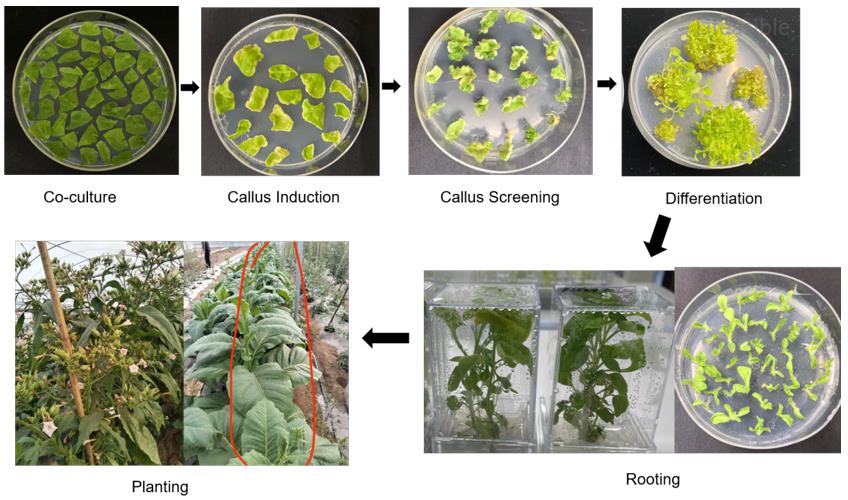
Agrobacterium-Mediated Leaf-Disk Transformation and Regeneration in Nicotiana tabacum
This case documents the complete Agrobacterium-mediated transformation workflow for tobacco, from initial leaf-disk co-cultivation through to greenhouse establishment. Leaf explants were subjected to co-culture, followed by callus induction on hormone-supplemented medium. Transgenic calli were recovered through stringent antibiotic screening and subsequently differentiated into green shoots. Elongated plantlets were transferred to rooting medium to develop robust root systems before hardening and final planting in soil under controlled greenhouse conditions, yielding healthy, flowering transgenic tobacco plants.

Multigene Agrobacterium-Mediated Tobacco Transformation for Drought Tolerance
Recent studies demonstrate that Agrobacterium-mediated leaf-disk transformation efficiently delivers multigene constructs into Nicotiana tabacum for abiotic-stress engineering. Using hypervirulent EHA105 carrying a Gateway pMDC99 vector, researchers stacked nced and rpk—rate-limiting enzymes in ABA biosynthesis—under drought-inducible promoters leaP and salT. Transgenic shoots were recovered on hygromycin and verified by PCR and Southern blot. Under methyl viologen stress, positive lines maintained higher chlorophyll and carotenoid levels, showed lower electrolyte leakage and MDA accumulation, and produced elevated endogenous ABA, validating tobacco as a robust chassis for metabolic pathway engineering.
Our commitment to precision and reliability has made Lifeasible a partner for academic and industrial researchers worldwide. Below are representative feedback from recent collaborations:
"Lifeasible's tobacco platform enabled us to generate 28 independent T0 lines expressing a complex monoclonal antibody construct in Xanthi NC within four months. The chloroplast transformation option they offered significantly boosted our protein accumulation levels compared to nuclear expression, and their molecular characterization report was detailed enough for our IND-enabling studies. Technical communication was prompt throughout."
Dr. E. Caldwell
Principal Investigator
USA
"We utilized the transient agroinfiltration service to screen twelve promoter variants driving a metabolic enzyme in tobacco. Turnaround from DNA delivery to Western blot data was under five days, which allowed us to identify the optimal construct for stable transformation within a single grant reporting cycle. The P19 co-infiltration option noticeably extended our protein expression window."
Dr. H. Whitmore
Senior Lecturer in Plant Biotechnology
UK
"For our nicotine biosynthesis project, Lifeasible delivered CRISPR-edited tobacco lines with confirmed biallelic mutations in the PMT gene family. The editing efficiency exceeded our expectations, and the accompanying off-target screening report gave us confidence to proceed with metabolic phenotyping. Their expertise in Solanaceae tissue culture was evident in the high regeneration rates."
Dr. F. Brenner
Group Leader, Natural Product Metabolism
Germany
"Our lab had struggled with stable transformation of a recalcitrant Oriental tobacco variety before engaging Lifeasible. They developed a modified biolistic protocol over six weeks and ultimately produced eight positive T0 lines. While the timeline extended beyond standard leaf-disk methods, the transparency in troubleshooting and the quality of the final molecular data were excellent."
Dr. C. Moreau
Research Director, Agronomic Institute
France
"We commissioned Lifeasible for both transient VIGS assays and stable overexpression of a transcription factor in K326. The VIGS phenotypes appeared consistently within ten days, and the stable lines showed the expected drought-tolerance phenotype in greenhouse trials. Their integrated service from vector design to phenotypic validation saved us significant internal labor."
Dr. G. Ricci
Associate Professor
Italy

Tobacco-Specific Expertise
Decades of specialized experience in Nicotiana tabacum transformation, encompassing both nuclear and chloroplast engineering, and spanning standard model cultivars to elite commercial varieties.

Genotype Versatility
Proven success across a wide range of tobacco genotypes, including Burley, Flue-cured, and Oriental lines, as well as specialized varieties such as yun87 and CB-1.

Technical Precision
Industry-leading editing efficiency utilizing CRISPR/Cas9, CRISPRa, and Prime Editing technologies tailored for the tobacco nuclear genome, plus established plastid transformation workflows.

Molecular Farming Integration
Unique capability to bridge stable transformation with downstream recombinant protein production and purification, supporting pharmaceutical and industrial applications.
Are you ready to accelerate your tobacco research?
Our technical experts are available to discuss your project requirements, from vector design to greenhouse management and protein harvest. From CRISPR-based gene editing to stable transgenic line development and transient expression screening, Lifeasible is your trusted partner for every stage of Nicotiana tabacum genetic engineering.
Nicotiana tabacum is not merely a cash crop, it is one of the foundational model systems that enabled the birth of modern plant genetic engineering. In 1983, tobacco became the first plant species to express a foreign gene stably, and it has since served as the proving ground for Agrobacterium-mediated transformation, chloroplast engineering, and virus-induced gene silencing. Its large leaf surface area facilitates high-biomass protein production, while its well-established tissue culture protocols allow rapid regeneration from multiple explant types. Unlike major food crops, tobacco's status as a non-food, non-feed plant reduces regulatory hurdles for molecular farming, making it an attractive host for producing pharmaceutical proteins, vaccines, and industrial enzymes. Furthermore, its diploid genetics and extensive genomic resources, including the TN90 and K326 reference assemblies, support precise genome editing and functional annotation.
Tobacco transformation has evolved from early protoplast electroporation experiments to highly efficient, genotype-flexible Agrobacterium and biolistic systems. The development of leaf-disk cocultivation in the 1980s established the gold standard for Solanaceae transformation, while the 1990s saw the first plastid transformation in tobacco, demonstrating high-level foreign protein accumulation without gene silencing. More recently, the advent of deconstructed viral vectors—such as the TMV-based magnICON system—and agroinfiltration protocols has transformed tobacco into a scalable biofactory capable of producing kilogram quantities of recombinant proteins within weeks. Concurrently, CRISPR/Cas9 and base editing tools have been optimized for tobacco, enabling targeted knockout of nicotine biosynthesis genes and precise modulation of secondary metabolite pathways.
Agrobacterium-mediated leaf-disk transformation is widely regarded as the gold standard for Nicotiana tabacum genetic engineering due to its precision, efficiency, and stability. This method exploits the natural T-DNA transfer machinery of Agrobacterium tumefaciens to deliver genetic payloads into wounded mesophyll cells, which are then induced to regenerate into whole plants via hormone-directed organogenesis. Compared to physical methods, Agrobacterium delivery typically yields low-copy-number insertions with intact transgene borders, reducing the risk of transgene silencing and complex rearrangements. In tobacco, the combination of highly responsive leaf tissue, a broad spectrum of compatible Agrobacterium strains, and well-defined selection systems (kanamycin, hygromycin, glufosinate) makes this approach exceptionally reliable for both basic research and commercial molecular farming applications.
Standard laboratory varieties such as Xanthi, SR1, and W38 exhibit the highest transformation efficiency and shortest regeneration timelines due to decades of protocol optimization around these genotypes. However, we routinely work with elite commercial cultivars including K326, yun87, CB-1, and various Burley and Oriental lines. While these often show slightly lower initial efficiency and longer callus induction phases, our team has developed genotype-specific adjustments to hormone ratios, Agrobacterium strain selection, and selection pressure intensity that reliably yield positive T0 events. For particularly recalcitrant varieties, we recommend a pilot feasibility study involving ten to twenty leaf disks to establish baseline parameters before committing to full-scale production.
Transient expression—typically achieved through agroinfiltration of the abaxial leaf surface or viral vector inoculation—allows foreign genes to be expressed within three to seven days without integrating into the host genome. This makes it ideal for rapid hypothesis testing, promoter characterization, CRISPR sgRNA pre-screening, and protein accumulation trials where speed outweighs the need for heritable traits. Stable transformation, conversely, involves permanent T-DNA or plastid genome integration followed by tissue culture regeneration, yielding transgenic lines that stably inherit the modification through sexual generations. Choose transient assays when you need quick, iterative data turnaround or when working with toxic constructs that might impair regeneration; choose stable transformation when your project requires long-term seed stocks, field trials, regulatory dossiers, or multi-generational phenotypic analysis.
Our tobacco transformation platform supports a broad spectrum of selectable markers to accommodate diverse project designs and biosafety preferences. Commonly employed nuclear markers include nptII (conferring kanamycin resistance), hpt (hygromycin resistance), bar or pat (glufosinate/ammonium resistance), and pmi (phosphomannose isomerase, a positive selection system using mannose). For chloroplast transformation, we typically use aadA (spectinomycin/streptomycin resistance) or similar plastid-specific markers. We also offer marker-free strategies, including co-transformation followed by segregation, or CRISPR/Cas9-mediated excision of selection cassettes after establishment. During project consultation, we help clients select the optimal marker based on their downstream application, regulatory environment, and whether the final product must be free of antibiotic resistance genes.
Absolutely. Nicotiana tabacum is one of the most advanced hosts for plant-made recombinant proteins, owing to its high biomass yield, well-established upstream transformation protocols, and—crucially—its status as a non-food crop that minimizes regulatory and public acceptance concerns surrounding transgenic food plants. Lifeasible supports molecular farming projects from gene design through to biomass harvest, offering optional downstream services including crude protein extraction, affinity purification, glycosylation profiling, and functional activity assays. We also provide chloroplast transformation services for applications requiring extremely high expression levels without nuclear gene silencing or pollen-mediated transgene flow, since plastids are predominantly maternally inherited in N. tabacum, significantly reducing the risk of transgene dissemination through pollen while providing biocontainment advantages. Whether your target is a therapeutic antibody, vaccine candidate, industrial enzyme, or nutritional protein, our integrated platform bridges genetic engineering with bioprocessing readiness.
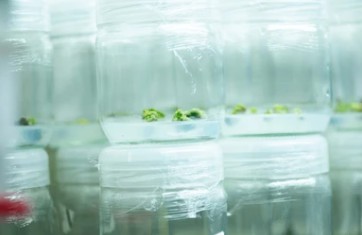
Agrobacterium tumefaciens-mediated Tobacco Leaf Disk Transformation
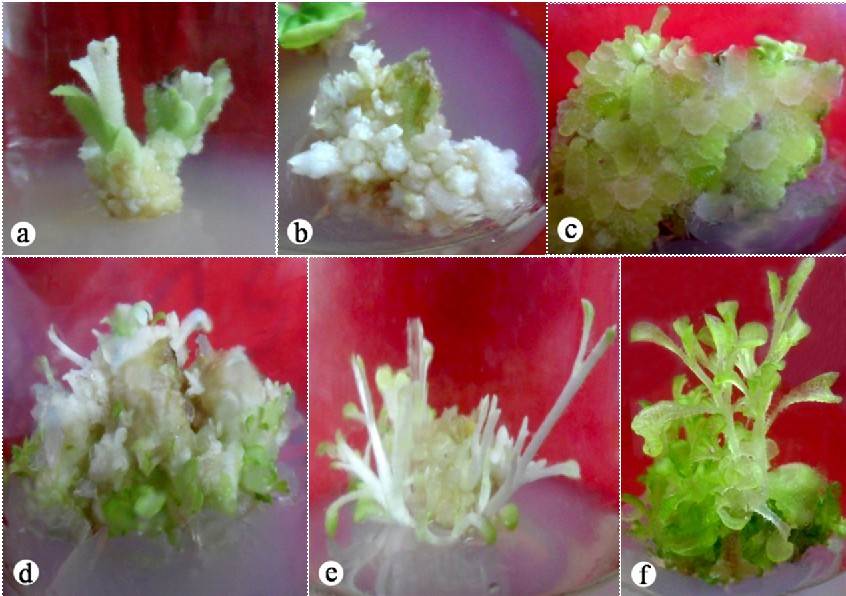
Induction and Culture of Tobacco Callus
Extraction and Purification of Tobacco Leaf RNA

Understanding GMOs: A Comprehensive Guide to Genetic Modification in Agriculture
Reference
 Download
Enter Your Details for Immediate PDF Access
Get Latest Lifeasible News and Updates Directly to Your Inbox


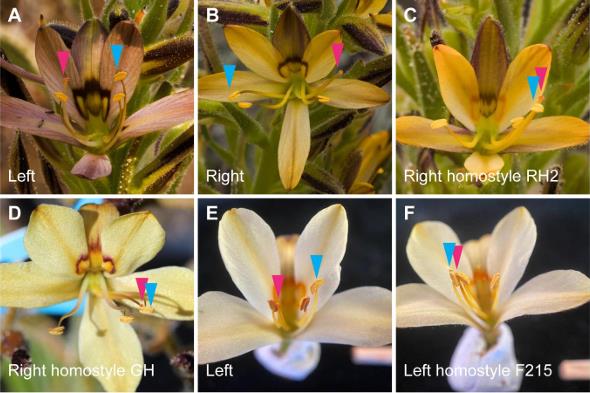
A Supergene for Mirror-Image Flowers in Wachendorfia
July 31, 2026
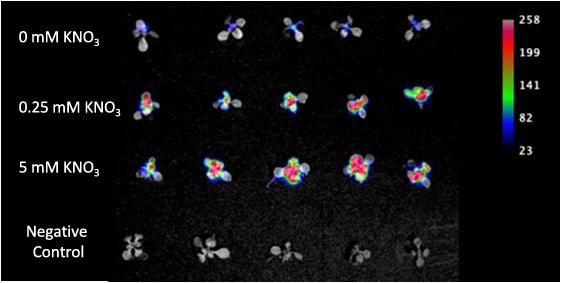
Sentinel Plants Quantify Bioavailable Nitrate
July 24, 2026